Home › Asphalt Sealcoating & Crack Filling
Guard your driveway investment with routine asphalt sealcoating in Dearborn, MI. We clean, fill cracks, and apply a rich protective sealer that blocks water, oil, and sun damage. Keep your driveway looking deep black and performing better for years with professional maintenance.
Precision Asphalt Detroit provides professional asphalt sealcoating throughout Dearborn, MI, Michigan and the surrounding area. Our licensed, insured crew delivers safe, clean, on-time work with a free estimate before anything begins. Call (313) 889-7046 or request your free quote.
Asphalt Sealcoating & Crack Filling in Dearborn, MI
Dearborn pavements take a beating from freeze-thaw cycles, road salt, and heavy traffic. Precision Asphalt Detroit focuses on asphalt sealcoating and crack filling that are tailored to these local conditions, not just a one-size-fits-all coating. Our goal is to slow down oxidation, stop water from getting into the base, and keep your lot or driveway looking professional for as long as possible.
Sealcoating is not just a dark black cosmetic layer. When it is applied at the correct thickness, with the right sand load, and to a properly prepared surface, it creates a protective barrier that can extend pavement life by years. Crack filling is the second half of that protection. If you seal over open cracks, moisture will still reach the base and you will continue to see heaving and potholes. We structure our work so that cracks are properly routed, cleaned, and filled before any sealer touches the pavement.
Whether you manage a busy commercial lot on Michigan Avenue or own a residential driveway in a Dearborn neighborhood, we adjust materials, timing, and traffic control to your specific site so you get more than just a darkened surface; you get a longer lasting pavement investment.
How We Prepare Your Asphalt Surface
The quality of sealcoating in Dearborn starts with preparation. At Precision Asphalt Detroit, more of our time is spent getting the surface right than actually spraying or squeegeeing the sealer. This is where many low bids cut corners.
We begin with a thorough inspection. We identify structural issues such as alligator cracking, base failure, ponding areas, and high traffic wear zones. If your asphalt needs patching or milling first, we will explain that clearly and show you why. Sealcoating will not fix structural failures, and we do not pretend that it will.
Next, we clean the pavement. We use high powered blowers, brooms, and in many cases mechanical sweepers to remove dust, sand, leaves, and loose aggregate. On commercial lots in Dearborn that see winter sanding or heavy truck traffic, we may make multiple cleaning passes. Oil spots are treated with a specialized oil spot primer so the sealer can bond; skipping this step leads to early peeling.
Edges along curbs, sidewalks, and building lines are trimmed by hand so sealer does not splash onto concrete or structures. If line striping is part of your project, we note existing markings and traffic patterns during prep so that re-striping is clean and accurate after the sealcoat cures.
Crack Filling: The Right Way for Dearborn’s Climate
Crack filling is where we stop water from destroying your pavement from the inside out. Dearborn’s freeze-thaw cycles magnify even small cracks, so we take this step seriously.
First, we classify cracks. Linear cracks that move slightly with temperature are typically treated with hot rubberized crack sealant. Wide or irregular cracks, or areas that show interconnected alligator cracking, may need localized patching instead of standard crack filling. We explain the difference so you know where your money is best spent.
We clean each crack with wire wheels, air compression, or mechanical routers depending on its size and contamination. This is critical on older Dearborn lots where dirt and vegetation often fill the gaps. Clean, dry sidewalls allow the hot sealant to bond fully.
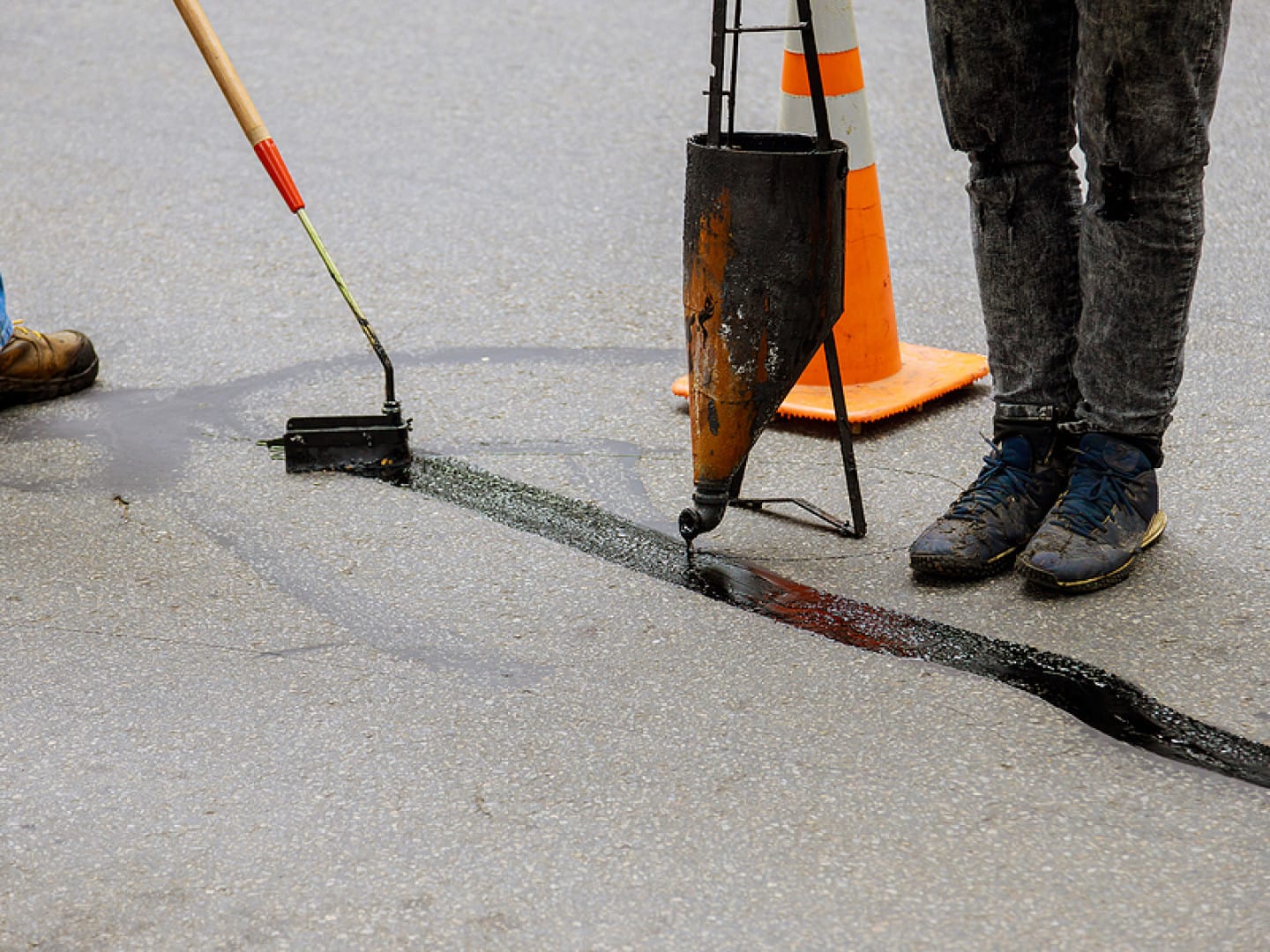
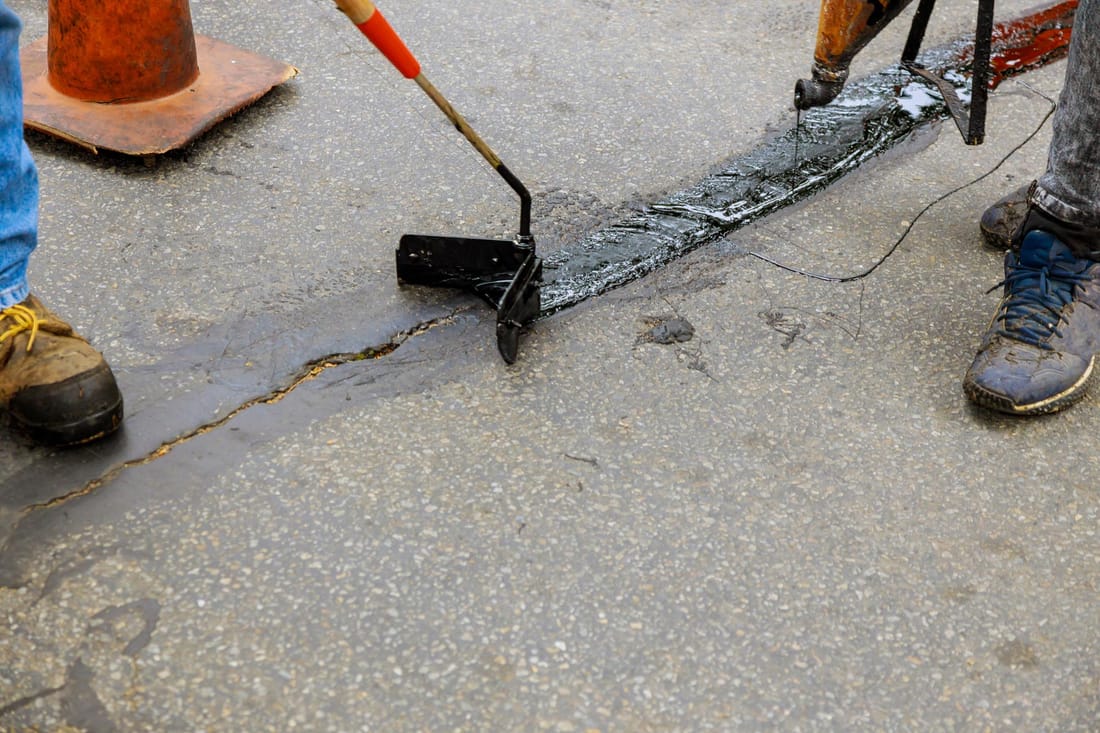
We then heat a rubberized crack sealant in a direct fire or oil jacketed melter to the manufacturer specified temperature. The material is applied using a wand, slightly overbanded on the surface to create a watertight seal. We strike it off as needed for a smooth profile that vehicles can drive over without tracking. Where expansion joints meet concrete or catch basins, we use different products or techniques so the joint can move without breaking the bond.
Only after cracks have cooled and set do we proceed to sealcoating. This sequence is important. It prevents the sealer from flowing into the cracks and starving the surface while leaving the gaps still vulnerable to water.
Our Sealcoating Materials and Application Methods
Precision Asphalt Detroit uses commercial grade, coal tar or asphalt emulsion sealers depending on site conditions, local regulations, and customer preference. In many Dearborn settings, we recommend a refined coal tar sealer for its superior resistance to gasoline and oil drips on parking lots. For customers who prefer a low odor or coal tar alternative, we offer high solids asphalt emulsion products.
We adjust sand and additive content based on how your pavement is used. High traffic drive lanes, entrances from Telegraph or Ford Road, and turning areas typically receive a higher sand load to improve traction and wear resistance. Residential driveways may receive a slightly smoother mix for easier snow shoveling.
Application method matters. On commercial lots, we often use a combination of spray and squeegee. The first coat may be squeegeed to work material into the surface voids, followed by a second sprayed coat for uniform appearance. On driveways or small areas, we may use brush or squeegee only for precise edging and control near garage doors or decorative concrete.
We follow manufacturer specifications for dilution and coverage rate. Under diluting to stretch material is one of the most common shortcuts that lead to premature wear. We document mix ratios and can provide them on request so you know exactly what was installed on your property.
Scheduling Work Around Dearborn Weather and Your Operations
Southeast Michigan weather has a direct impact on when and how we perform asphalt sealcoating. In Dearborn, the practical season typically runs from late April through early October, although specific timing depends on night temperatures and humidity.
Sealcoating requires a dry surface, no active rain, and pavement and air temperatures usually 50 degrees and rising. In spring and fall we pay close attention to overnight lows because cool nights slow curing. For large commercial lots along Michigan Avenue or near Fairlane Town Center, we may stage work in phases to keep sections open while others cure.
For businesses, we plan sealcoating and crack filling during off hours, weekends, or split shifts so customers and employees still have access. We provide a traffic control plan that may include cones, barricades, tape, and on-site personnel for busy sites. On residential work, we explain clearly how long you should keep vehicles off the driveway, typically 24 to 48 hours depending on weather and product.
We also consider local factors such as shade from mature trees, drainage patterns, and snow plow routes. Shady or low lying areas in Dearborn often take longer to dry. We adjust scheduling and sequencing so those areas are not coated late in the day when they are unlikely to cure properly.
What Affects the Cost of Sealcoating & Crack Filling
Pricing for asphalt sealcoating and crack filling is not just about square footage. Precision Asphalt Detroit builds estimates using several specific factors, so you understand why one site costs more or less than another.
Pavement condition is the first driver. Surfaces with extensive cracks, heavy oil contamination, or areas that need patching before coating will cost more than a relatively sound lot or driveway. A Dearborn industrial lot that has seen years of semi truck traffic will typically need more prep and more material than a light duty residential drive.
Size and layout matter. Wide open areas are more efficient to seal than many small, broken up sections around islands and loading docks. Hand work along curbs, bollards, and building edges takes more time than spray application on open pavement.
Material choices also affect cost. High solids sealers, additional coats, high sand content mixes, or specialty additives for faster drying or extra fuel resistance all change the price. For crack filling, the linear feet of cracks, average width, and whether routing is required will influence your total.
We provide itemized proposals that separate crack filling, sealcoating, and any necessary patching or striping. That way you can see exactly where your budget is going and make informed decisions about priorities.
How Precision Asphalt Detroit Protects Your Investment
A well planned sealcoating program should be part of a long term pavement management plan, not a one time event. In Dearborn’s climate, most asphalt benefits from sealcoating every 2 to 4 years, depending on traffic and exposure. Precision Asphalt Detroit helps you map out a realistic maintenance schedule instead of selling you unnecessary coatings.
We stand behind our workmanship. While sealcoat is a wearing surface and will naturally lose some richness over time, it should not peel in sheets or wash off after normal curing. If you have concerns after the job is complete, we want to hear from you. We document weather conditions, materials, and application rates, which allows us to troubleshoot any issues quickly and accurately.
We also provide practical guidance for daily care. For example, we advise Dearborn commercial clients on plow blade settings to reduce gouging in winter, and we suggest where to place dumpster pads or heavy equipment to minimize rutting. For residential customers, we explain how to avoid early damage, such as sharp turning of steering wheels while the car is stationary on fresh sealer.
By combining precise crack filling, quality sealcoating materials, careful application, and ongoing advice tailored to southeast Michigan, Precision Asphalt Detroit helps your pavement hold up to our weather and your traffic as efficiently as possible.