Home › Road, Street, and Municipal Paving
Keep traffic moving smoothly with professional road paving in Dearborn, MI. We pave and resurface streets, subdivision roads, and municipal routes with durable asphalt built for local conditions. Our team coordinates traffic control and phasing to minimize disruption while delivering quality results.
Precision Asphalt Detroit provides professional road paving throughout Dearborn, MI, Michigan and the surrounding area. Our licensed, insured crew delivers safe, clean, on-time work with a free estimate before anything begins. Call (313) 889-7046 or request your free quote.
Road, Street, and Municipal Paving in Dearborn MI
Precision Asphalt Detroit provides full-service road, street, and municipal paving for cities, townships, and private owners throughout Dearborn and the surrounding Detroit area. We focus on durable asphalt solutions that stand up to heavy traffic, freeze-thaw cycles, and Michigan’s deicing salts.
Our team handles everything from short neighborhood streets and industrial access roads to full municipal resurfacing programs. We understand local requirements, from Dearborn Engineering Division standards to Wayne County specifications, and we coordinate with inspectors so your project moves forward without costly delays. Whether you manage a subdivision HOA, a commercial campus, or a public roadway, we build pavements that handle real traffic loads, not just look good on day one.
How Road Paving Projects Are Planned and Designed
Successful road paving in Dearborn starts long before the first truck arrives. We begin with a site evaluation that looks at current pavement condition, drainage patterns, subgrade strength, traffic volumes, and axle loads. A lightly traveled residential street off Greenfield Road needs a different design than a truck route serving a warehouse near the Ford facilities.
Based on that assessment, Precision Asphalt Detroit recommends an approach: mill and overlay, full-depth reclamation, or complete reconstruction. We determine asphalt thickness, aggregate base depth, and mix type by using traffic projections and local soil conditions. On clay-heavy soils common in this area, we often specify thicker aggregate base or soil stabilization to prevent rutting and alligator cracking.
We also plan drainage and cross-slope. Even a small crown in the road or properly set gutters can prevent standing water, which is a major cause of potholes during Michigan’s winters. Curbs, drainage inlets, and driveway approaches are checked to maintain positive flow so water leaves the pavement quickly instead of soaking into the base.
Step-by-Step: Our Road and Street Paving Process
For most municipal and private streets, the work follows a clear sequence designed to control quality and minimize disruption to residents and businesses.
1. Traffic control and notifications. We coordinate with the city and property owners to set staging, detours, and work hours. Residents are notified about access limits and parking changes so they can plan ahead.
2. Surface preparation. Existing pavement is milled or removed to a specified depth. We clean the surface, adjust utility structures like manholes and valve boxes, and saw-cut tie-in areas at intersections and driveways for a smooth transition.
3. Subgrade and base work. We shape the roadbed to the designed grade, then place and compact aggregate base. In weaker areas we may undercut soft spots, install geotextile fabric, or use lime or cement stabilization to firm up the subgrade.
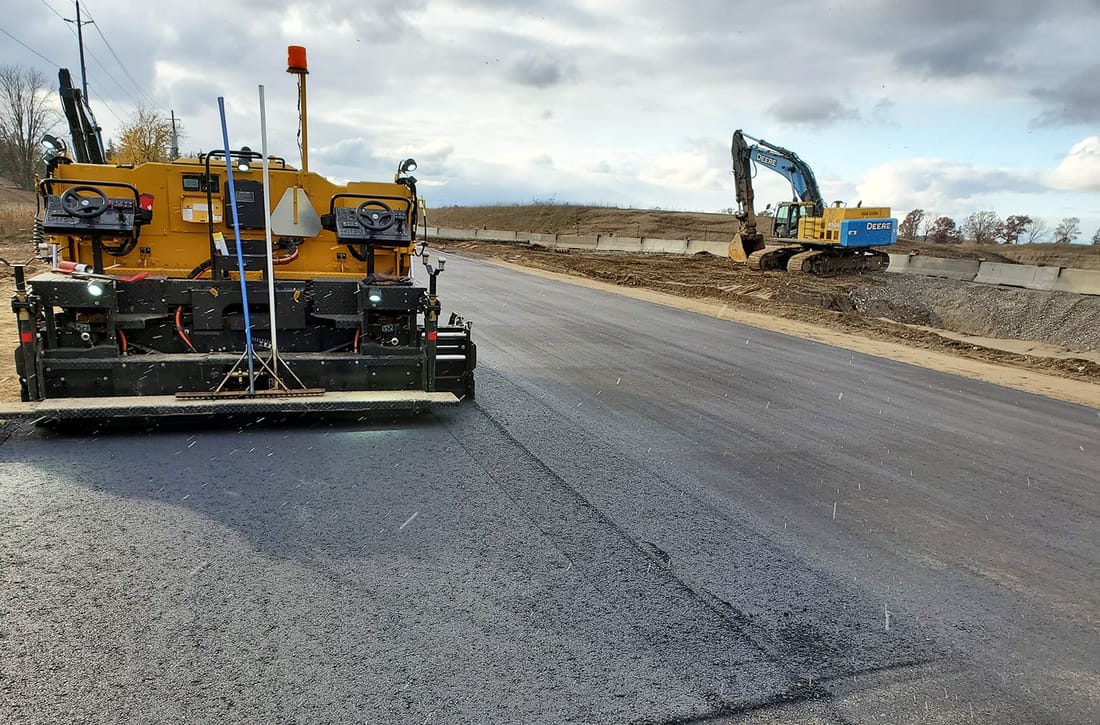
4. Binder course paving. For streets and roads, we typically install a thicker, coarser asphalt binder course first. This layer provides strength and can be opened to traffic if needed while we prepare for the surface lift.
5. Surface course paving. We place a finer, tighter-graded asphalt surface that provides skid resistance, a smooth ride, and resistance to water penetration. Joints are carefully matched and rolled so you do not feel bumps at lane lines or tie-ins.
6. Compaction and quality checks. Rollers follow a rolling pattern based on mix temperature and thickness. We monitor density and smoothness so the pavement reaches the design lifespan.
7. Pavement markings and restoration. Once asphalt has cooled, we install lane lines, crosswalks, stop bars, and symbols, then restore shoulders, driveways, and adjacent lawns or landscaping.
Material Options and Mix Designs for Dearborn Roads
Road paving is not a one-mix-fits-all service. Precision Asphalt Detroit works with local asphalt plants to specify mixes suited to Dearborn traffic and climate.
For municipal and collector streets, we often recommend performance-graded asphalt binders that resist rutting during summer heat yet flex in winter. Heavier truck routes might receive a richer binder content and a stone matrix design to reduce deformation under turning and braking loads.
Residential streets typically get a quieter, finer surface course that reduces tire noise and looks clean in subdivisions. On roads prone to frequent utility work, such as near older neighborhoods, we may suggest slightly thicker surface courses or leveling layers to allow for future milling without reaching the base.
We also consider additives and specialty options when appropriate. Polymers can improve resistance to cracking from temperature swings. In high-reflectivity or high-pedestrian areas, aggregate choices can improve night visibility and traction. Our recommendations always balance performance with budget, so you know exactly why a particular mix makes sense for your street or project.
What Drives Cost for Road, Street, and Municipal Paving
Road paving budgets in Dearborn can vary significantly, and understanding the cost drivers helps you plan realistic projects and avoid surprises.
Key factors include:
• Pavement thickness and structure. The more traffic and trucks a road carries, the thicker the asphalt and base must be. A quiet cul-de-sac is much less expensive per foot than an industrial access road.
• Existing conditions. Severely failed pavement with base failures typically needs deeper reconstruction or undercutting, which increases cost compared to a straightforward mill and overlay.
• Drainage and concrete work. Adding or repairing curbs, gutter pans, catch basins, or ADA-compliant ramps adds line items to the project but is often necessary to meet city standards.
• Staging and traffic control. Busy intersections, school zones, and constrained commercial corridors require more flaggers, signage, and off-hours work. That extra planning and labor affects pricing.
• Project size and mobilization. A single short block still requires mobilizing crews, equipment, and traffic control. Larger programs, such as multiple subdivision streets completed at once, can spread those costs over more square yards.
Precision Asphalt Detroit provides detailed, itemized proposals that show these components so municipal staff, engineers, HOAs, and property managers can see exactly where funds are being invested.
Managing Common Road Paving Issues in Michigan’s Climate
Dearborn’s climate and soil conditions create predictable problems that a paving contractor must anticipate, not just react to.
Potholes and alligator cracking typically come from water infiltration and base movement. We address this with proper milling depths, patching of failed areas before overlay, and attention to joint construction. Where repeated failures occur in the same location, we investigate base and drainage rather than simply resurfacing the symptoms.
Freeze-thaw cycles lead to heaving at utilities and along the edges of narrow streets. To combat this, Precision Asphalt Detroit carefully adjusts manhole frames, valve boxes, and curb inlets prior to paving, and we avoid thin tapers that are prone to breaking off in winter.
Because Michigan uses deicing salts, we focus on dense-graded surface mixes and proper compaction to reduce salt penetration. We also recommend a maintenance plan that may include crack sealing and periodic overlays to extend the life of the original investment.
Finally, scheduling is critical. In southeast Michigan, the most reliable paving window is typically late April through October, with peak quality in late spring and early fall when temperatures are moderate. We help you plan projects so the asphalt is placed and compacted within ideal temperature ranges, which significantly affects long-term performance.
Working With Precision Asphalt Detroit on Your Next Road Project
When you work with Precision Asphalt Detroit, you are not just buying asphalt by the ton. You are partnering with a contractor that understands the expectations of Dearborn’s public works staff, inspectors, HOAs, and commercial facility managers.
We assist with project scoping, budget planning, and phasing so roads remain as accessible as possible for residents, emergency vehicles, and deliveries. Our crews are trained to maintain neat work zones, protect existing utilities and structures, and keep communication clear with site representatives.
Before the first day on site, you receive a schedule, staging plan, and contact information for the project lead. During construction, we proactively address issues like access for school buses, trash pickup routes, and shift changes at nearby plants or offices.
If you are planning road, street, or municipal paving in Dearborn, reach out to Precision Asphalt Detroit for a site review and a straightforward, technically sound proposal. We will explain your options in clear terms and design a pavement solution that matches your traffic, budget, and long-term goals.